







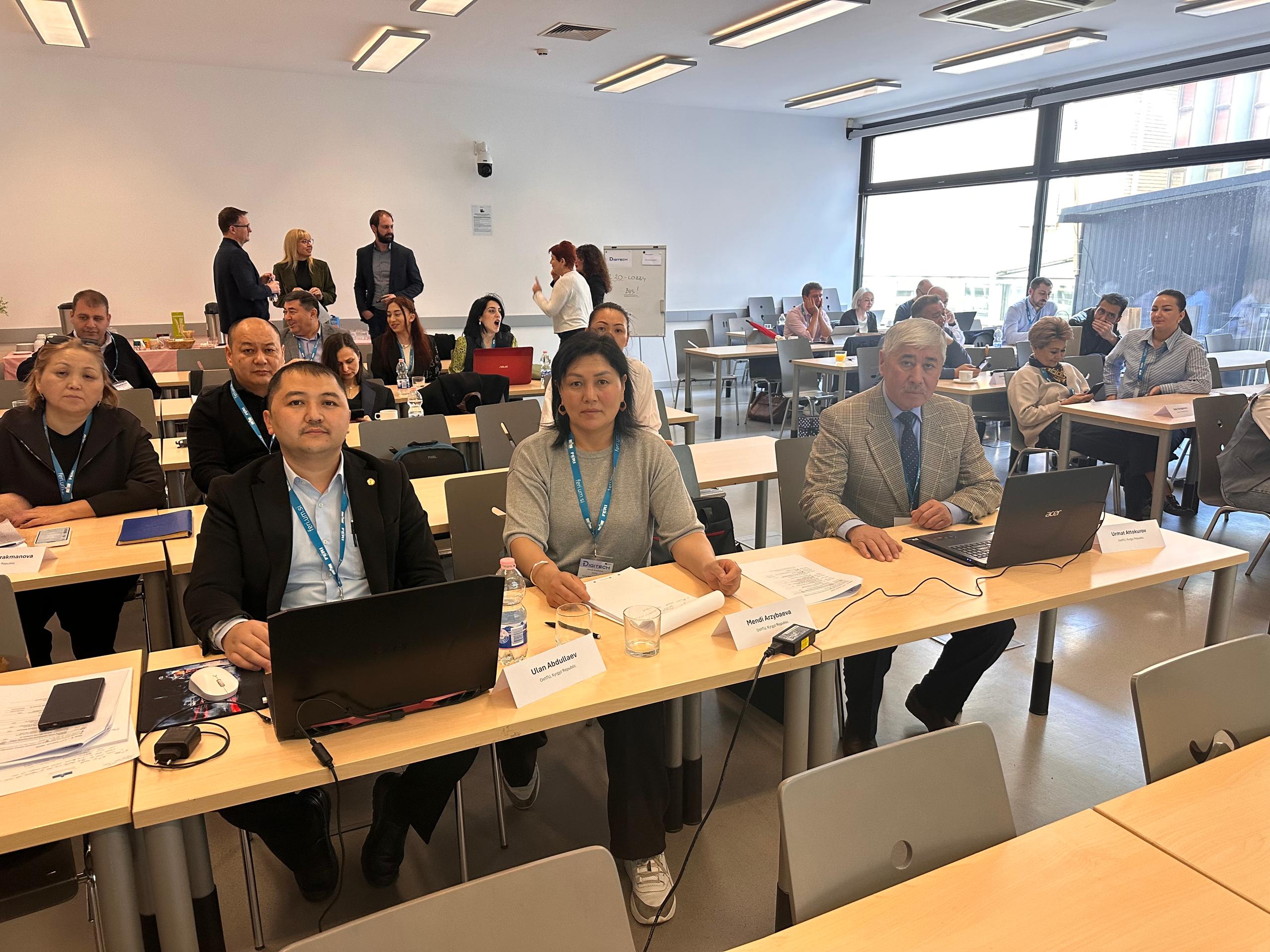
A seminar and the next consortium partners’ meeting organized within the framework of the Erasmus+ DIGITECH project was held at the University of Maribor, Republic of Slovenia.
The event was attended by the DIGITECH project coordinator, Professor of Osh Technological University Attokurov Urmat Tologonovich, Head of the Academic Affairs Department Abdullaev Ulan, Director of the Institute of Innovative and Information Technologies Arzybaeva Mendi, Associate Professor of the “Applied Informatics and Big Data” educational program Matisakov Jumakadyr, Senior Lecturer Abdrakhmanova Ksaiet, and Specialist of the International Relations Department Narmirzaeva Sharapat.
From Kyrgyzstan, the Kyrgyz-German Institute of Applied Informatics participated as a partner. International partners included HAW Hamburg University (Germany), the University of Maribor (Slovenia), ASUE, the Ijevan Branch of Yerevan State University (Armenia), as well as GTU and BTU universities (Georgia).
Within the framework of the event, participants exchanged experience on the modernization of higher education programs, integration of digital technologies into the learning process, and development of modern curricula.
During the training, the following key areas were addressed:
- updating curricula and aligning them with international standards;
- applying competency-based education approaches;
- effective use of digital tools (online platforms, LMS systems) in teaching;
- development of practice-oriented education models;
- studying best practices of European universities.
Professors and experts from the University of Maribor organized practical sessions, group work, and presentations. Participants worked on improving curricula within the framework of their projects. The OshTU delegation also analyzed the structure of educational programs and developed proposals for their improvement together with the team.
The training provided valuable practical and theoretical experience in updating educational programs in line with modern requirements. Participants gained new approaches in competency-based teaching, effective use of digital technologies, and development of practice-oriented education models. In addition, the analysis of European practices expanded opportunities for aligning curricula with international standards.
